

Introducing Yehoshua of Ēatūn
Why I release my music under this name, and the history, language, and scriptural meaning behind it

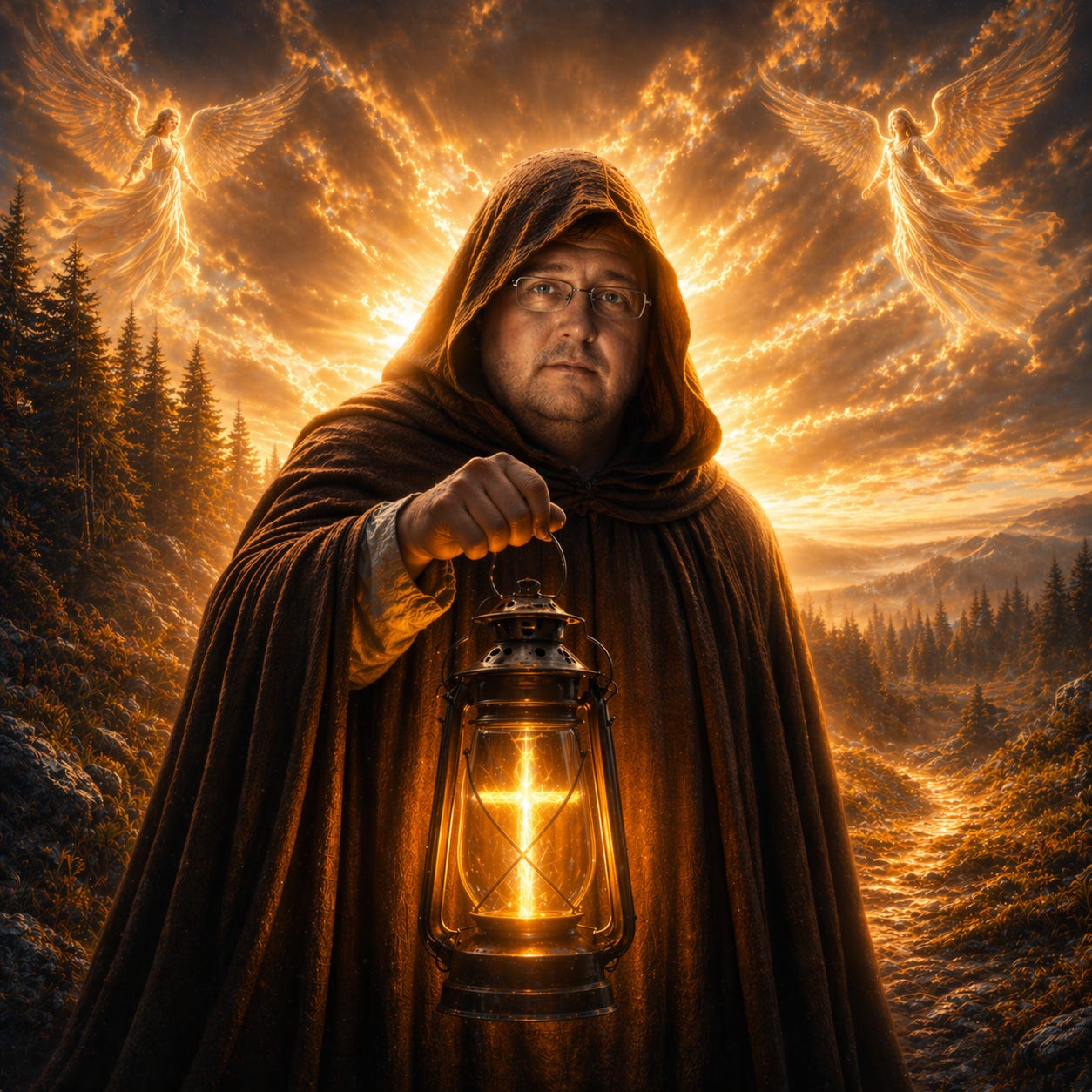
Some announcements deserve more than a passing mention.
This is one of them.
From this point forward, the name under which I release my music is Yehoshua of Ēatūn.
This is the official artist name under which I will be publishing my musical work: psalms, hymns, singles, and other gospel-related releases. It is also why I have created a dedicated section here on Substack under that name. Going forward, that section will serve as the home for future music-related updates, album announcements, release notes, and related reflections, so that those who want to follow this part of my work can find it gathered in one place.
I wanted to introduce that name clearly and properly, because it was not chosen at random, nor was it chosen merely because it sounded distinctive. It was chosen because it is historically, linguistically, and spiritually connected to my own name.
Many people know me as Joshua Eaton. That remains my own name. But for my music, I wanted a name that reached more deliberately into the older roots of both the personal and family name I carry — one that reflected not only identity, but inheritance, scriptural gravity, and historical continuity.
That is what Yehoshua of Ēatūn represents.
The first name, Yehoshua, is the older Hebrew form behind the English name Joshua. Encyclopedia Britannica identifies Yehoshua as the Hebrew form of Joshua and gives its meaning as “Yahweh is deliverance.” That matters to me deeply because it means the name does not merely sound ancient; it is ancient. It carries scriptural weight, covenantal resonance, and a meaning rooted in divine salvation.
That older form also carries a specific biblical history. In the Hebrew Bible, the figure known in English as Joshua is the successor to Moses, the one appointed to lead Israel forward after Moses’ death. Britannica describes him as the personally appointed successor to Moses. So when I chose Yehoshua, I was not simply choosing a foreign-language variation of my first name. I was choosing to reach back toward the older and more original form of a name that already carries scriptural significance, leadership, continuity, and the idea of being led forward under God.
There is more to it than that as well. The name Joshua is connected to the Hebrew verbal root associated with salvation and deliverance. Sources on Biblical Hebrew naming note that Hoshea is connected to the Hebrew root meaning “to save,” and that in Numbers 13:16, Moses gives Hoshea the name Yehoshuaʿ. That matters because it means Yehoshua is not merely a different pronunciation of “Joshua”; it points directly back into the linguistic and scriptural world from which the English form came.
That was important to me.
Because the music I am releasing is not casual in its intent. It is not merely entertainment separated from the deeper body of work I have been building. It is music rooted in faith, scripture, reverence, endurance, prayer, and gospel conviction. For that reason, I did not want to release it under a name that felt disconnected from those things. I wanted the name itself to bear some of that history.
The second part of the artist's name, Ēatūn, carries that same principle into my family name.
This is not a decorative respelling. It is not simply a stylized invention. It reaches back to the earliest historical form of my surname in its English lineage. Authoritative surname references trace Eaton to Old English place-name elements such as ēa (“river”) and tūn (“enclosure,” “settlement,” or “town”), while other standard references note related forms connected with a river, island, or low-lying land plus tūn. In other words, the older form is not ornamental; it is historical.
That distinction matters to me a great deal.
When I chose to use Ēatūn, I was not trying to create distance from the name Eaton. I was doing the opposite. I was reaching backward toward its older form and historical character. I wanted the name under which I release sacred and gospel-centered music to reflect not only who I am in the present, but the older linguistic roots from which that identity descends.
So while I am not releasing this music under the name Joshua Eaton, I am also not stepping away from my own name. I am, in a very real sense, going deeper into it.
That is why the name matters.
It is the older Hebrew root of my first name, joined to the older historical form of my family name. It brings together scriptural inheritance and English lineage. It is personal, historical, and deliberate.
And because of the type of music I am releasing, that deeper grounding felt fitting.
Writing and music do not always ask to be carried in the same way. Writing can explain things. It can teach, reason, clarify, and unfold. Music can do something different. It can pray. It can lament. It can praise. It can carry sorrow and reverence together. It can speak to the soul in ways that prose often cannot.
That is especially true of the work I am now releasing under this name.
My first release as Yehoshua of Ēatūn is The Flame Remains, released on March 28, 2026 — my mother’s birthday. That release consists essentially of Psalms 1 through 11 from The Keeper’s Lantern, given musical form. I had felt for some time that those psalms would live naturally as music. They were written as texts, but from the beginning, there was something in them that seemed to call for melody, atmosphere, and full musical expression.
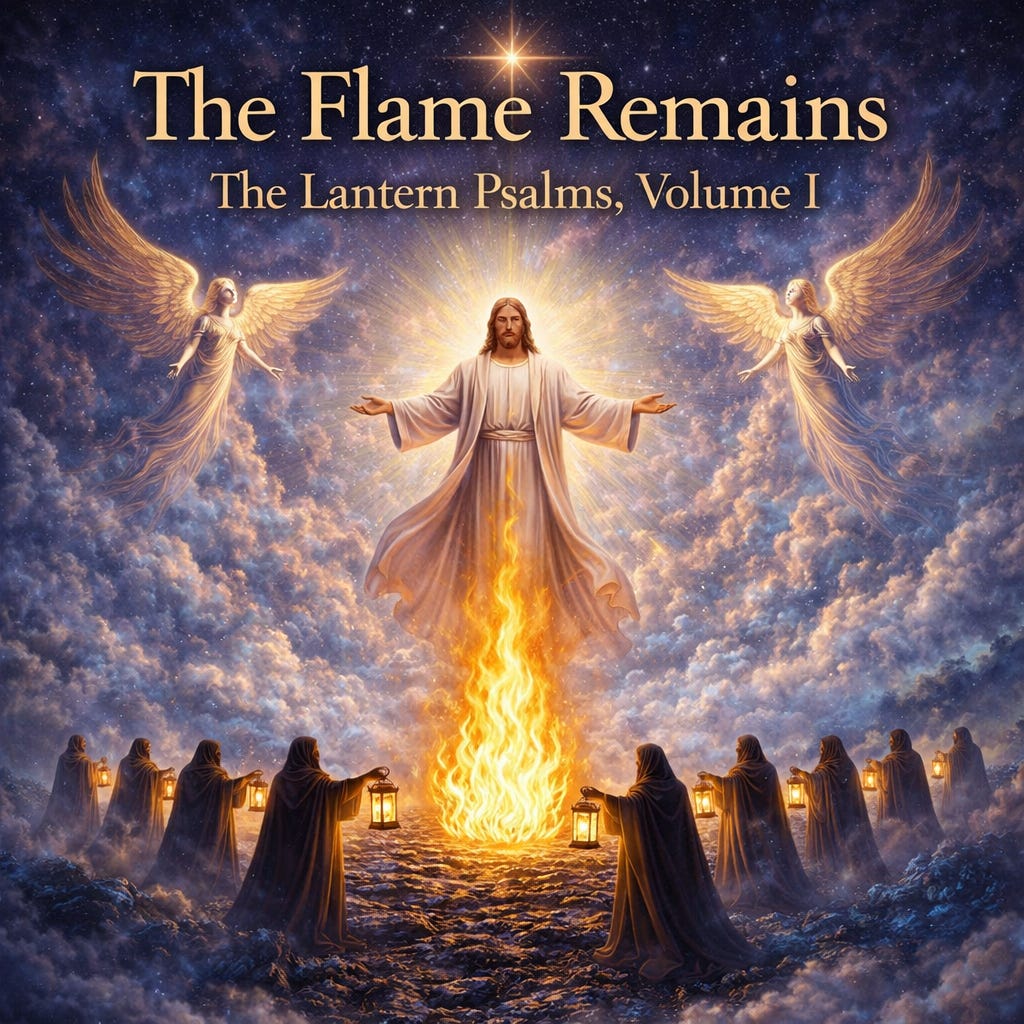
So this release is not a departure from The Keeper’s Lantern. It is an extension of it.
And that will continue.
Under the name Yehoshua of Ēatūn, I will be releasing psalms, hymns, singles, and other gospel-related music as this body of work expands. Some of it will emerge directly from The Keeper’s Lantern and its world. Some of it will stand on its own. Some of it will be meditative, some devotional, some solemn, some expansive. But all of it belongs to the same larger vision that has shaped my work from the beginning.
That includes the audiobook as well. When The Keeper’s Lantern is released in audiobook form, the psalms are intended to appear not merely as spoken passages, but as full musical productions within the audiobook itself. In that sense, the music is not separate from the book’s world. It is part of it. It grows from the same flame.
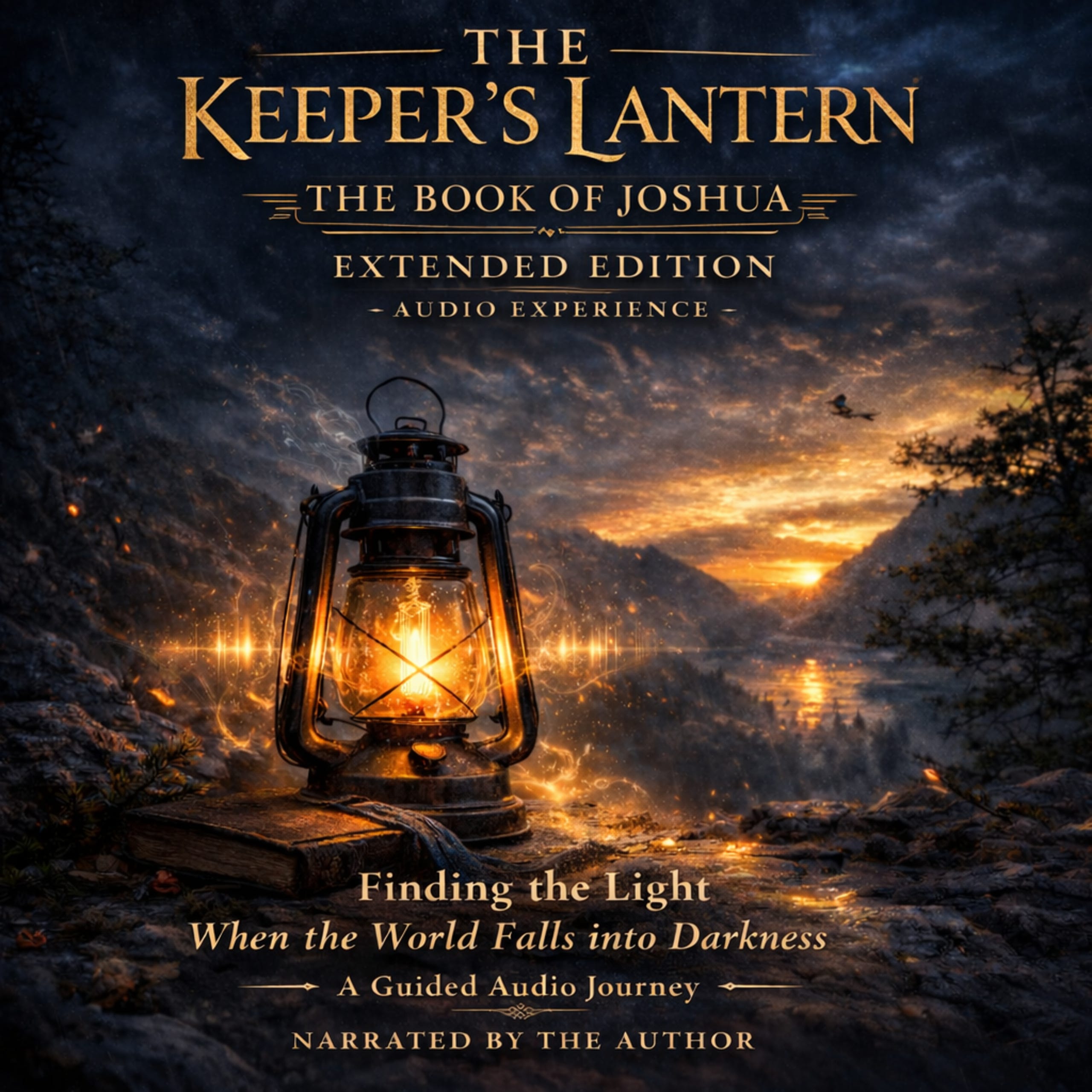
That is another reason I wanted the musical work to have its own proper name and place.
And that is why this Substack now has a dedicated section under Yehoshua of Ēatūn. It gives that musical work a home. It creates a place where future updates can be followed more clearly. And it marks this part of my work for what it is: not a side note, but a distinct branch of the same creative and spiritual calling.
So let this article serve as the formal introduction.
Yehoshua of Ēatūn is the name under which I release my music.
It is a name drawn from the Hebrew root of my first name, a name whose scriptural world is bound up with deliverance, calling, and continuity. It is joined to the older historical form of my family name, rooted in the English past from which that name descends.
It is not a mask.
It is not an invention detached from me.
It is not an aesthetic exercise.
It is my name, carried more deeply into its own origins.
And it is the name under which this music will now be known.
Beginning with The Flame Remains, and continuing through future psalms, hymns, singles, and gospel-centered releases, that is the name that will carry this work forward.
Yehoshua of Ēatūn.